The Future of Manufacturing at CES 2026
February 17, 2026

- Author: CTA Staff
The manufacturing industry is undergoing a seismic shift, fueled by cutting-edge technologies and evolving global business demands. As companies seek smarter, more resilient production models, CES® 2026 emerged as the premier destination for discovering transformative solutions and forging high-impact partnerships.
This year, manufacturing assumed a more visible role at the world’s most powerful tech event. With the introduction of a Manufacturing Track and the debut of SME’s Advanced Manufacturing Showcase in Central Hall as well as a keynote by Siemens AG President and CEO Roland Busch, CES 2026 shined a spotlight on next-gen manufacturing, highlighting how advances in energy, mobility and AI are reshaping how products are designed, built and delivered.
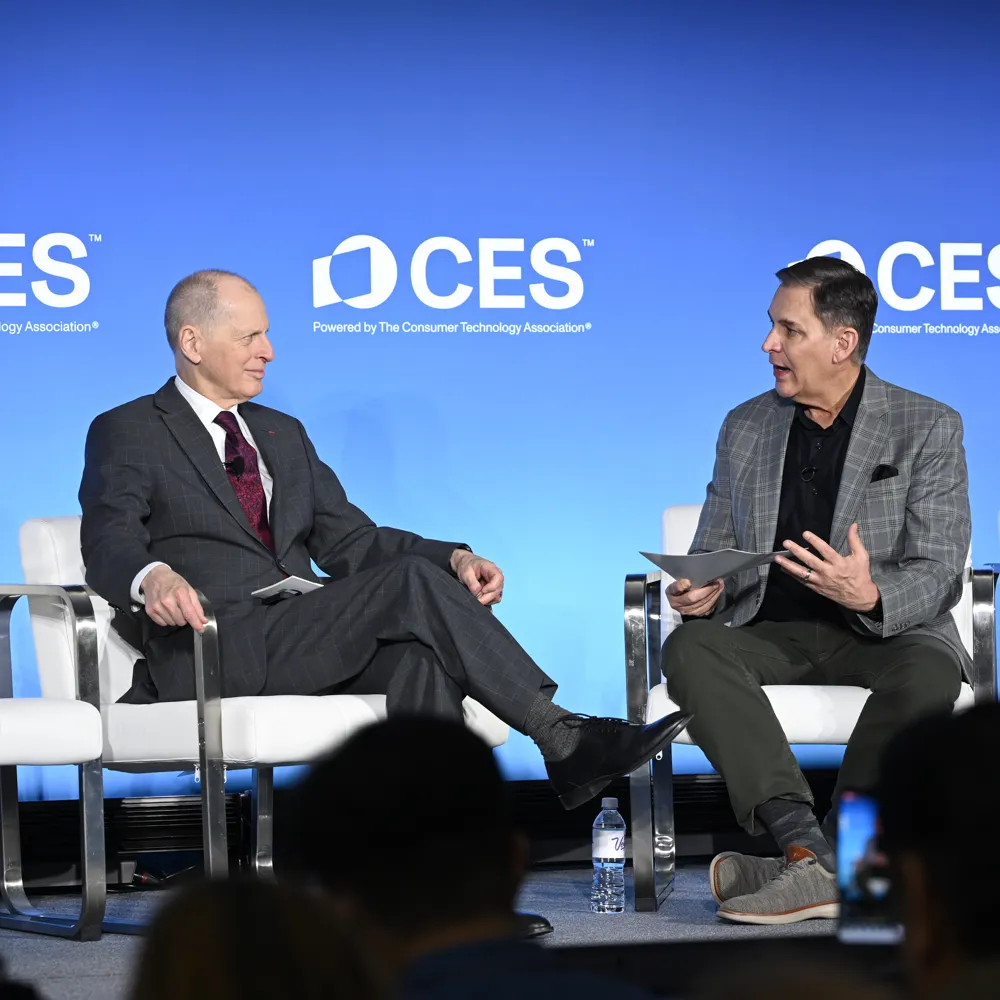
Discussions on Strategy, Technology and Leadership
The new Manufacturing Track was open to all attendees and designed to connect industrial innovation with the broader technology ecosystem. In a pivotal conversation, National Association of Manufacturers President and CEO Jay Timmons joined Consumer Technology Association Executive Chair and CEO Gary Shapiro for a fireside chat, “Charting the Future: Manufacturing, Innovation and America’s Competitive Edge.” Their conversation focused on how a comprehensive national manufacturing strategy — supported by smart workforce policy — could strengthen U.S. manufacturing leadership amid global competition and rapid technological change.
Shapiro also emphasized how bringing manufacturing to the center of CES reflects a growing recognition that innovation does not stop at design or software. It depends on the ability to scale, produce and deliver.
Another highlight was the session “Building Skills & Talent for the Next Era of Manufacturing.” SME Executive Director and CEO Jeannine Kunz explored how new training models, skills development strategies and emerging technologies are redefining modern manufacturing — and what those changes mean for workforce readiness and long-term economic growth. She noted that manufacturing is the engine that transforms innovation into real world impact, and that engine depends on a skilled, future-ready workforce.
Manufacturing’s AI Moment
Artificial intelligence has become foundational to the future of the industry. From predictive maintenance to real-time supply chain optimization, AI is rapidly becoming manufacturing’s operating system. The less glamorous truth: There is no AI without energy.
In their chat, Shapiro and Timmons remarked that America’s AI advantage would hinge on energy policy, infrastructure and execution speed, not just software talent or venture investment. Manufacturing sits at the center of this convergence as both a heavy user of AI and the builder of the physical systems that make it possible. The message was clear: AI leadership is an infrastructure issue. Without reforms, the U.S. risks losing AI investment, manufacturing capacity and growth to faster‑moving nations.
During his powerful keynote, Dr. Busch reinforced the power of AI in optimizing manufacturing and unveiled plans for an Industrial AI Operating System, designed to revolutionize how companies design, engineer and operate physical systems.
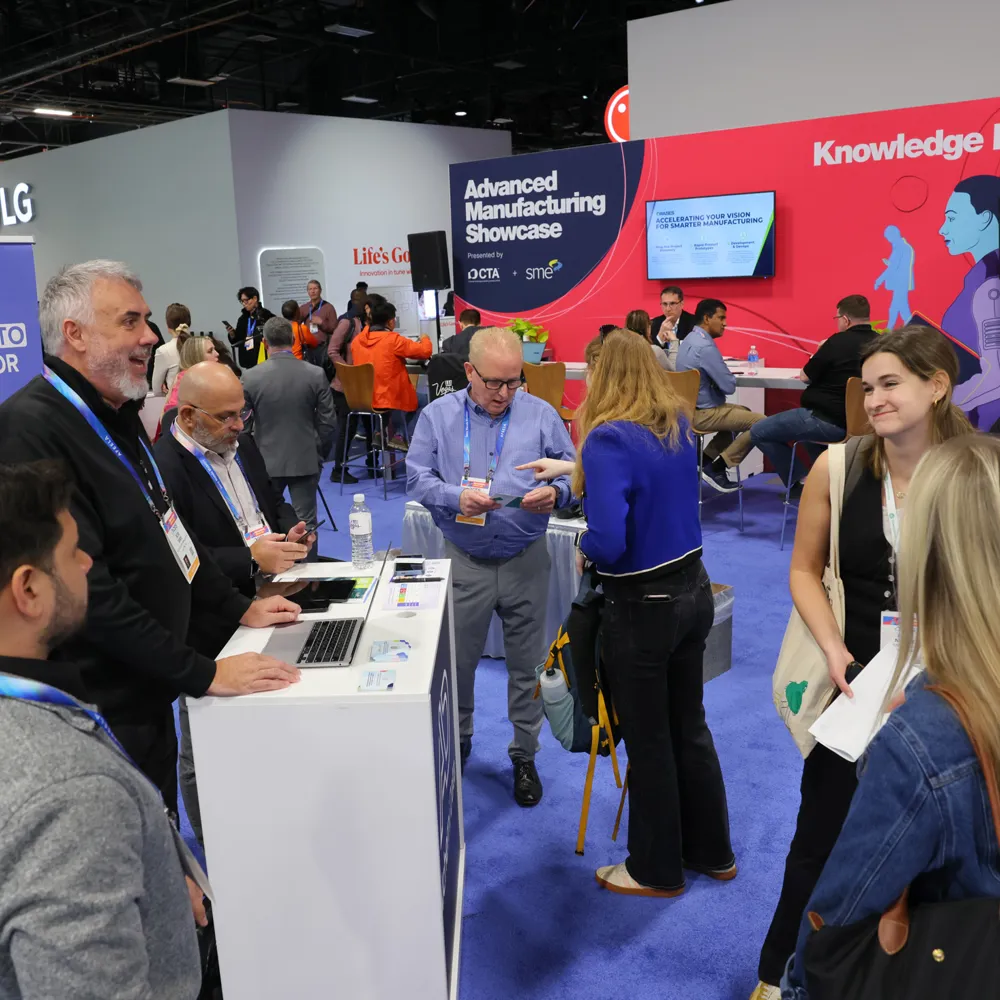
Where Innovation Met Production
All this innovation wasn’t just talk, it could be seen throughout the show floor. In Central Hall, SME and CTA unveiled the Advanced Manufacturing Showcase, marking a pivotal chapter for manufacturing’s profile on the global tech stage. The collaboration put advanced manufacturing in direct conversation with technologies shaping the future economy, giving attendees a dedicated platform on the capabilities, infrastructure and innovation needed to scale production, strengthen supply chains and expand operations in the U.S. and worldwide. From automation and digital manufacturing to quality, materials and software, the exhibit showed how advanced production helps companies move faster, build resilient supply chains and compete globally.
In North Hall, exhibitors showed off industrial robotics, simulation software and AI-enabled systems designed to boost productivity, improve safety and strengthen supply chain performance. And South Hall highlighted the global product design, sourcing and production ecosystem with exhibitors offering demos on turning ideas into market-ready creations.
Throughout the show, supply chain technologies demonstrated how manufacturing innovation depends on the ability to move materials and products efficiently across global networks. AI-powered systems, connected IoT sensors, warehouse robotics and blockchain solutions are transforming logistics into predictive, transparent systems. Exhibitors including 1NCE, Autofleet, Mapbox and Safect demonstrated solutions from freight tracking and theft prevention to delivery optimization and real-time logistics intelligence.
A Hub for Manufacturing Conversations
In addition, the SME Knowledge Bar created space for practical discussions on U.S. competitiveness, from reshoring and next‑generation automation to digital manufacturing, workforce readiness and the infrastructure required to scale domestic production.
The Knowledge Bar complemented exhibitors including Alchemi Data Management, AURA Technologies, EOS, Formlabs, JR Automation, Lumafield, Mastercam, Orases, PAR Systems, Terragrit, Universal Robots and ZEISS Industrial Quality Solutions — each demonstrating how advanced manufacturing accelerates production and fortifies supply chains.
By bringing advanced manufacturing perspectives to CES, SME exposed a global audience of innovators, investors and policymakers to the production strategies powering the modern economy.
A Defining Moment
The manufacturing world is no longer just about assembly lines and heavy machinery, it's a dynamic, tech-driven ecosystem evolving at lightning speed. Innovation is the name of the game, and manufacturers are embracing a wave of technologies that are reshaping how products are assembled and delivered.
The debut of the Manufacturing Track and the Advanced Manufacturing Showcase at CES 2026 underscored the convergence of manufacturing, automation, AI and digital infrastructure as core elements of the global tech ecosystem. More than just exhibits and discussions, it signaled a shift: Manufacturing is no longer behind the scenes — it’s at the center of the innovation conversation.